


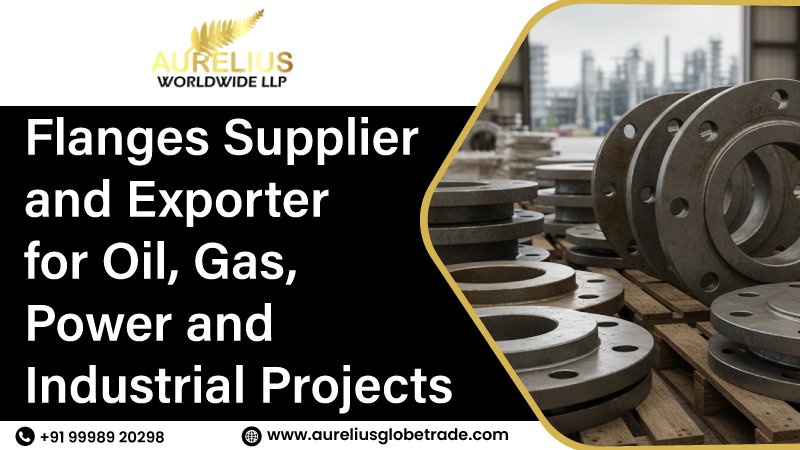
What holds together the world’s most critical pipelines. What keeps pressure systems safe in oil fields, power plants, and chemical factories. The answer is simple and often overlooked. Flanges. These small but powerful components connect pipes, valves, and equipment into one working system. When a flange fails, the entire operation can stop. That is why project owners and EPC contractors never compromise on sourcing. If you plan to buy flanges for industrial use, this guide will help you understand materials, standards, applications, and global supply. You will also see how Aurelius Worldwide LLP supports large projects with reliable and export-ready flange solutions.
Why Flanges Matter in Industrial Systems
Flanges create strong, serviceable joints in piping systems. They allow easy assembly, inspection, and maintenance. In oil and gas, power, water, and chemical plants, flanges face high pressure, temperature, and corrosion. This is why buyers work with a professional industrial flange’s supplier instead of a general hardware source. A focused pipe flanges manufacturer and flanges exporter understands material behaviour, machining accuracy, and standard compliance.
Understanding the Global Demand for Flanges
Today, flanges move across continents as part of large infrastructure and energy projects. Countries in the Middle East, Europe, North America, Asia-Pacific, and Africa import large volumes from India. Markets like UAE, Saudi Arabia, USA, Germany, UK, Singapore, South Africa, and Nigeria lead in repeat orders. Buyers prefer India because of strong manufacturing capacity, wide material options, and project supply experience. This global demand structure and application mapping aligns with the technical and market reference data shared in your uploaded document.
Why Bulk Sourcing Makes Business Sense
When you place a flanges bulk order, you gain better cost control, consistent quality, and predictable delivery. Large projects use hundreds or thousands of pieces in the same specification. Sourcing from multiple vendors increases mismatch risk. This is why EPC companies and plant owners prefer to work with a reliable flanges supplier and flanges distributor who can manage volume and documentation under one contract.
Role of Aurelius Worldwide LLP in Global Flange Supply
Aurelius Worldwide LLP supports international buyers with project-based and bulk supply of flanges. The company focuses on correct material selection, standard compliance, and export documentation. As a growing flanges exporter and flanges supplier, Aurelius Worldwide LLP serves oil and gas, power, chemical, water, and industrial manufacturing sectors across multiple regions. The approach stays simple. Clear specifications. Stable supply. Reliable shipments.
Flanges by Material and Their Uses
- Carbon Steel Flanges: Carbon steel remains the most widely used material in oil, gas, steam, and water pipelines. Many buyers source from a carbon steel flanges supplier or a105 flange supplier for pipeline and refinery projects. These flanges offer strong mechanical performance and good cost control.
- Stainless Steel Flanges: For corrosive or hygienic applications, stainless steel plays a key role. A professional stainless steel flanges supplier supports SS 304 and SS 316 grades for chemical plants, food processing, and pharmaceutical lines. These flanges support long service life and clean operation.
- Alloy Steel Flanges: High temperature and high-pressure systems in power plants and refineries often use alloy steel. Buyers work with an alloy steel flanges supplier or p11 flanges supplier and p22 flanges exporter for these duties.
- Duplex, Super Duplex, and Nickel Alloys: Offshore, marine, and aggressive chemical environments use duplex, super duplex, Inconel, Hastelloy, and Monel. These materials offer high strength and corrosion resistance in critical services.
Flanges by Type and Application Fit
- Welding Neck Flanges: Welding neck flanges are used in high pressure and high temperature lines. They are common in oil and gas, power, and chemical plants. Many projects specify a welding neck flanges supplier for main process lines.
- Slip On Flanges: Slip on flanges are easy to install and cost-effective. They are widely used in water pipelines, utilities, and general industry.
- Blind Flanges: Blind flanges close pipe ends and allows future expansion. They are used in pressure testing and line isolation.
- Socket Weld and Threaded Flanges: These flanges serve smaller diameter and moderate pressure lines. They are common in utilities, instrumentation, and compact systems.
- Lap Joint Flanges: Lap joint flanges support frequent dismantling and are used with stub ends in systems that need regular inspection.
Pressure Classes and International Standards
Global buyers always specify standards and ratings. Common requirements include asme flanges supplier, ANSI flanges manufacturer, DIN, and EN standards. Pressure classes like Class 150, 300, 600, 900 and PN ratings define service limits. A professional flanges exporter aligns machining, drilling, and marking with these standards.
Industry-Wise Applications of Flanges
- Oil and Gas Industry: This sector consumes the highest volume of flanges. Upstream, midstream, and downstream pipelines, refineries, LNG plants, and offshore platforms all rely on strong flange joints. Welding neck, RTJ, and blind flanges in carbon steel, alloy steel, and duplex are widely used.
- Chemical and Petrochemical Plants: Chemical plants handle acids, alkalis, and solvents. Stainless steel, alloy steel, and nickel alloy flanges support these services. Lap joint, socket weld, and welding neck flanges are common here.
- Power Generation: Thermal and renewable power plants use high temperature and high-pressure piping. Alloy steel and carbon steel welding neck flanges dominate steam and boiler lines.
- Water Supply and Wastewater Treatment: Municipal water systems, desalination plants, and sewage treatment facilities use slip on, blind, and threaded flanges in carbon steel and stainless steel.
- Marine and Offshore Engineering: Shipbuilding and offshore platforms use stainless steel, duplex, and super duplex flanges for seawater and aggressive environments.
- Food, Beverage, and Pharmaceutical: These industries focus on hygiene. Stainless steel flanges support clean and easy-to-maintain piping systems.
- Infrastructure and EPC Projects: HVAC, firefighting, and utility networks use large volumes of carbon steel and stainless-steel flanges for plant construction and public infrastructure.
Global Markets That Import Flanges from India
The Middle East leads in oil and gas and EPC demand, including UAE, Saudi Arabia, Qatar, Oman, Kuwait, and Bahrain. Europe markets like Germany, UK, France, Italy, Spain, and Netherlands focus on standard-driven projects. North America including the USA and Canada demands ASME and API aligned products. Asia-Pacific markets like Singapore, Malaysia, Indonesia, Vietnam, Thailand, Japan, and South Korea invest in infrastructure and industry. Africa markets like South Africa, Nigeria, Kenya, and Egypt focus on energy, water, and mining. These trade patterns and application sectors match the market data in your reference document.
Why India Is a Preferred Source for Flanges
India offers competitive pricing compared to Europe and the USA. The country supports a full range of materials and standards. Indian exporters also have strong experience in EPC and project supply. This combination makes India a practical sourcing base for global buyers, as reflected in your technical and market reference file.
Quality Control and Documentation
In project supply, paperwork matters as much as the product. Buyers often ask for flanges with MTC and inspection records. A serious pipe flanges manufacturer and exporter controls raw material, forging, machining, and final checks before shipment. This reduces rejection risk and keeps site work moving.
Why Choose Us
Choosing Aurelius Worldwide LLP means working with a partner who understands project supply, export logistics, and international standards. The company focuses on correct material selection, proper specifications, and complete documentation. As a dependable flange’s supplier and flanges exporter, Aurelius Worldwide LLP supports oil and gas, power, chemical, water, and industrial projects across global markets. The focus stays on long-term cooperation, stable supply, and clear communication, which helps buyers reduce risk and manage large projects with confidence.
Conclusion
Flanges may look simply, but they carry the responsibility of safety, pressure control, and system stability. From oil and gas to power, chemical, water, and industrial plants, the right flange choice protects both equipment and investment. When you buy flanges in bulk, you need more than low pricing. You need reliable standards, consistent quality, and export-ready supply. Aurelius Worldwide LLP supports global buyers with project-focused sourcing, technical clarity, and stable deliveries, helping complex projects move forward without supply interruptions.
Planning to buy flanges in bulk for oil, gas, power, or industrial projects. Contact Aurelius Worldwide LLP at +91 99989 20298 or email business@aureliusglobetrade.com to discuss your specifications today.
Key Takeaways
- Flanges are critical to safety and reliability in piping systems.
- Bulk sourcing improves cost control and technical consistency.
- Material and standard selection define service life.
- India remains a strong global source for industrial flanges.
- Aurelius Worldwide LLP supports complete and export-ready project supply.
FAQs
Can I place a flanges bulk order for EPC or plant projects?
Yes, bulk and project-based supply is available with full technical documentation and inspection support.
Which materials do you supply?
Supply includes carbon steel, stainless steel, alloy steel, duplex, super duplex, and nickel alloys based on application.
Do you follow ASME, ANSI, and DIN standards?
Yes, flanges can be supplied as per ASME, ANSI, DIN, EN, and other required international standards.
Which countries do you export to?
Supply supports the Middle East, Europe, North America, Asia-Pacific, and Africa based on project needs.
How can I start a bulk order discussion?
You can call +91 99989 20298 or email business@aureliusglobetrade.com with your size, material, and quantity details.